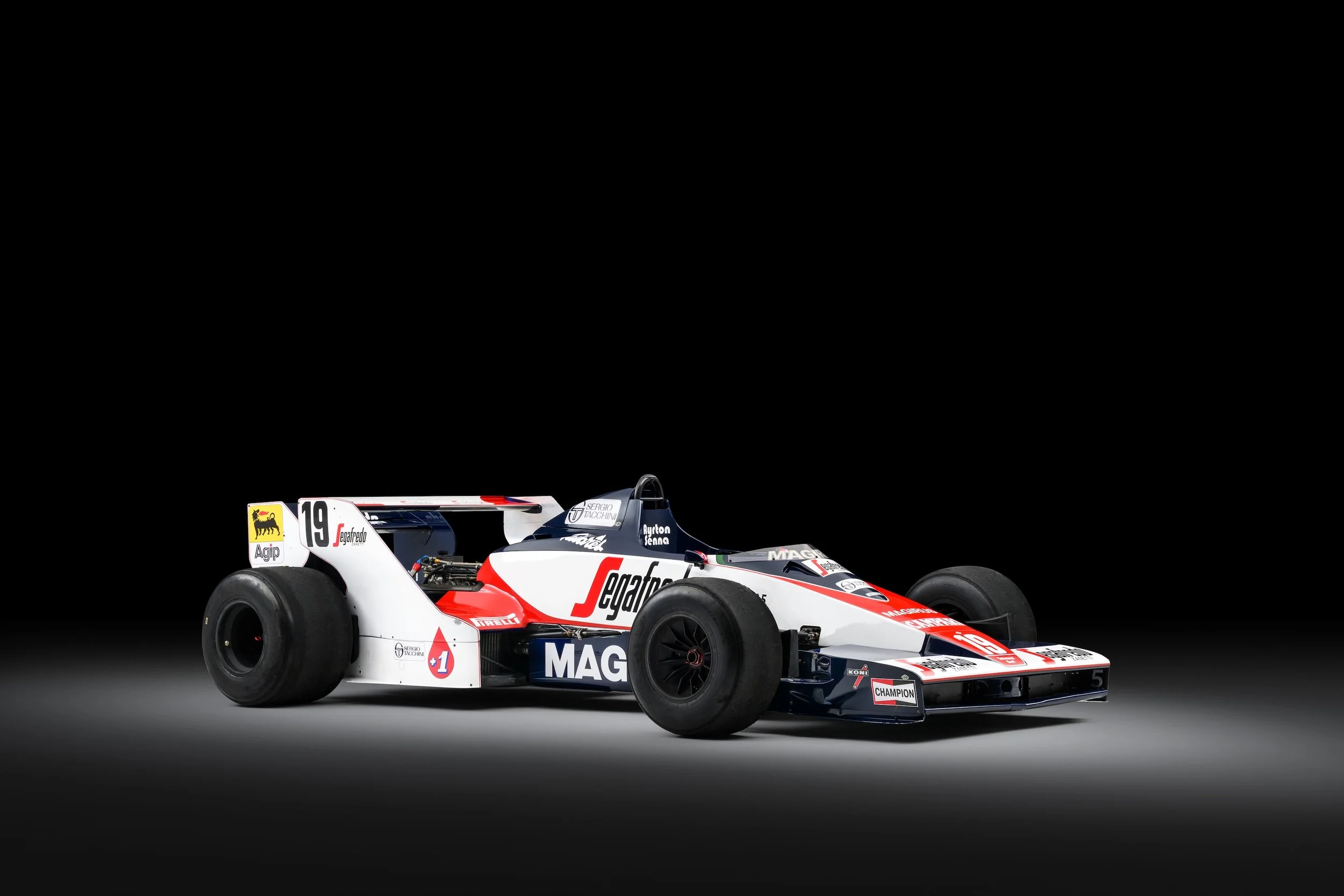
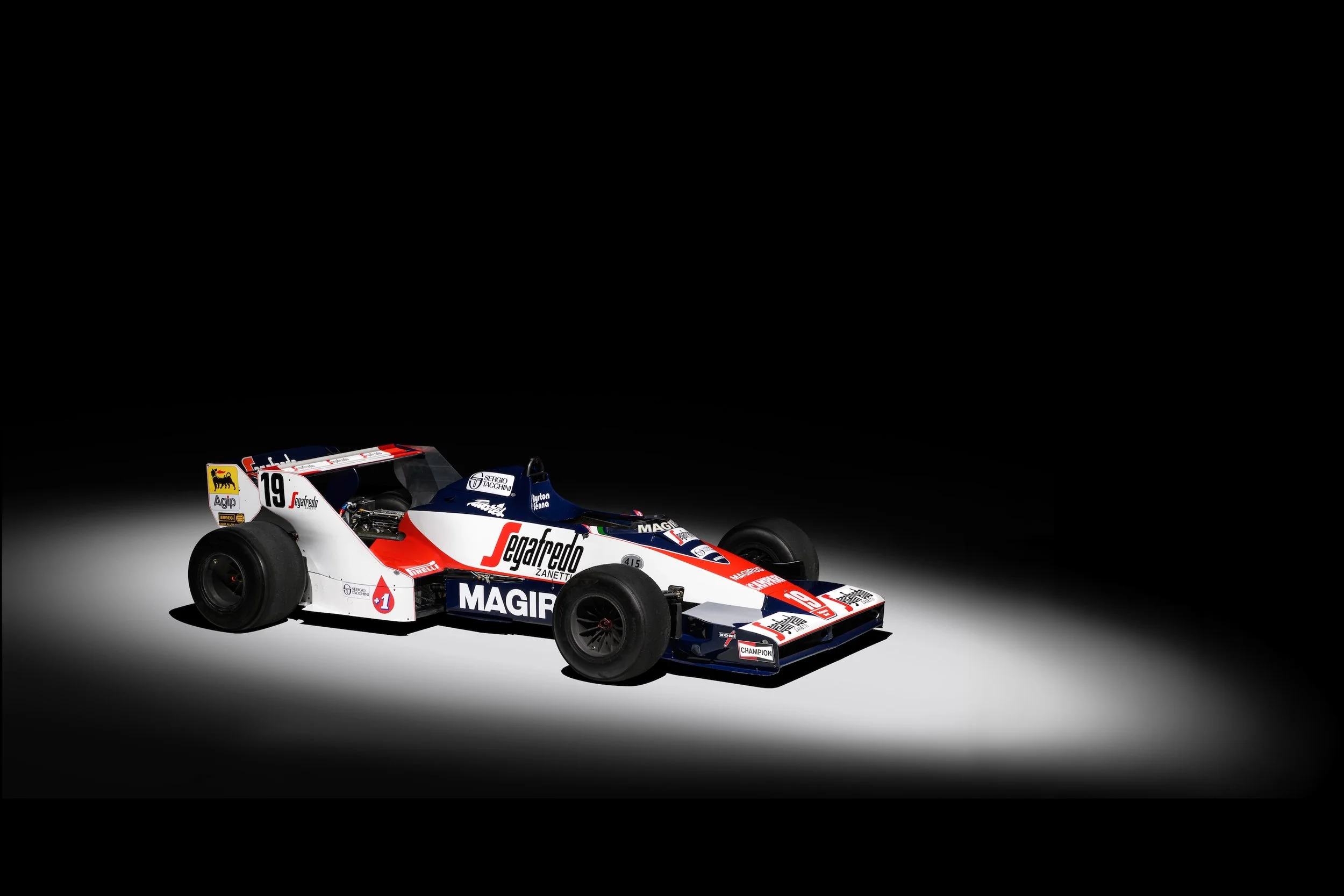
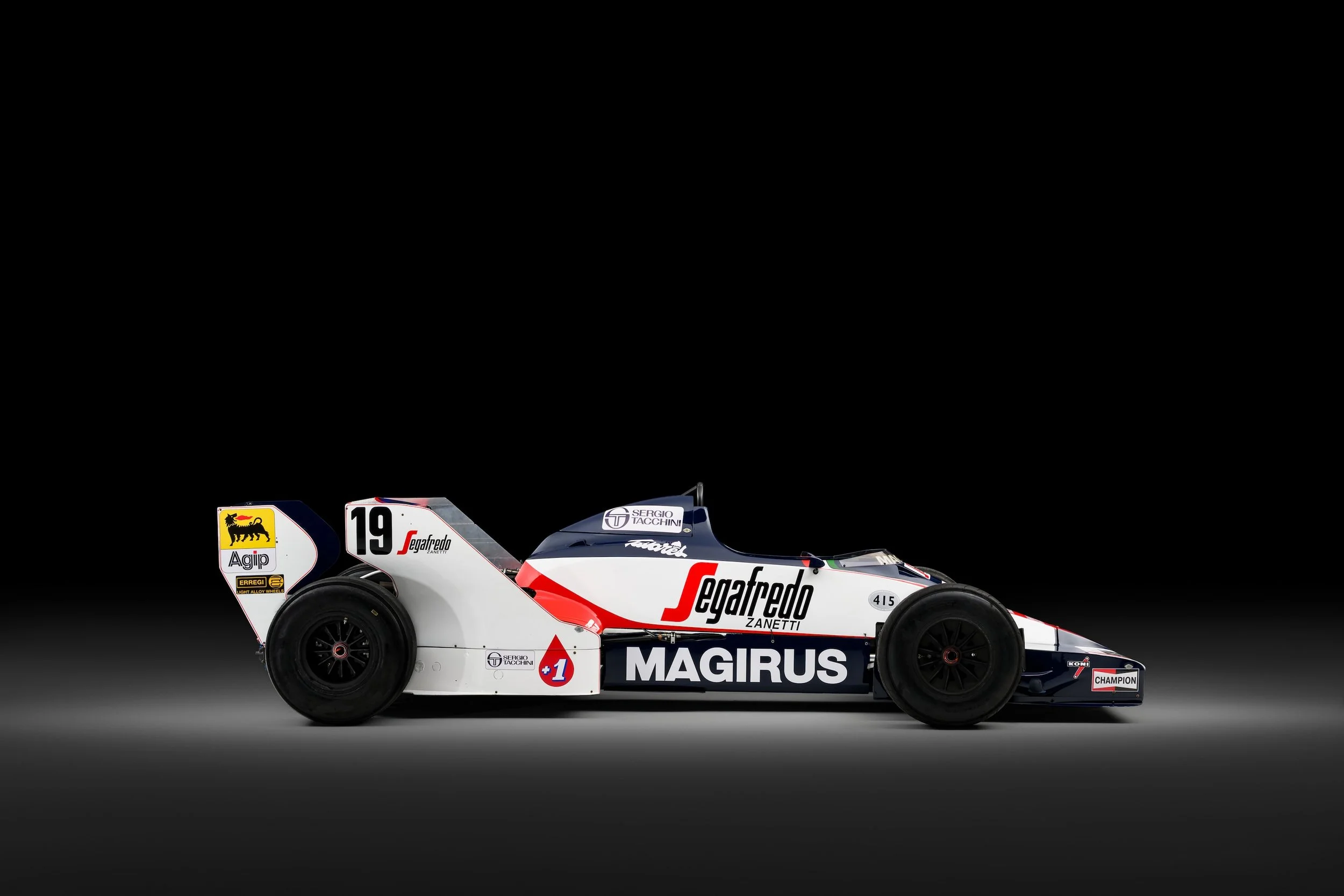
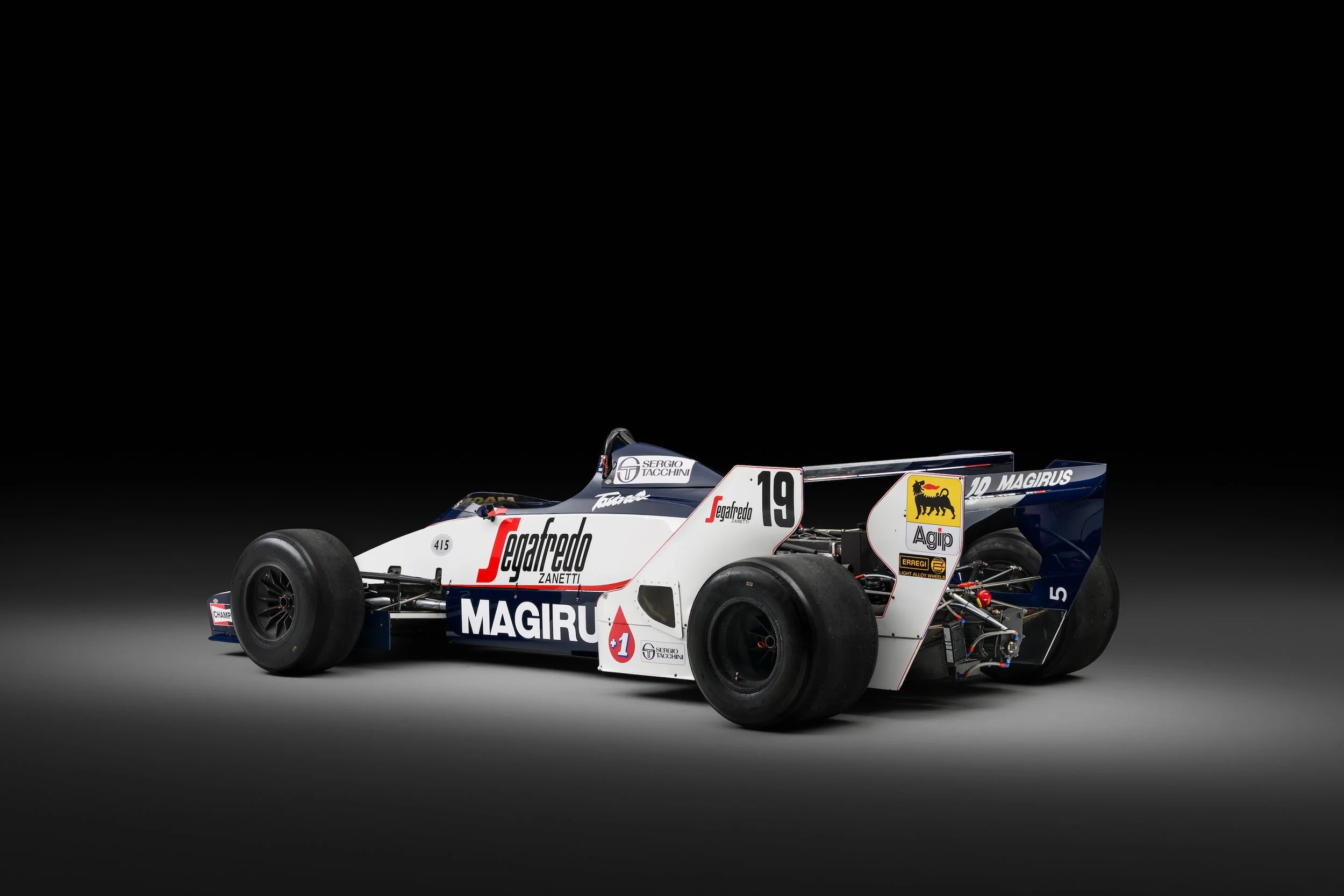
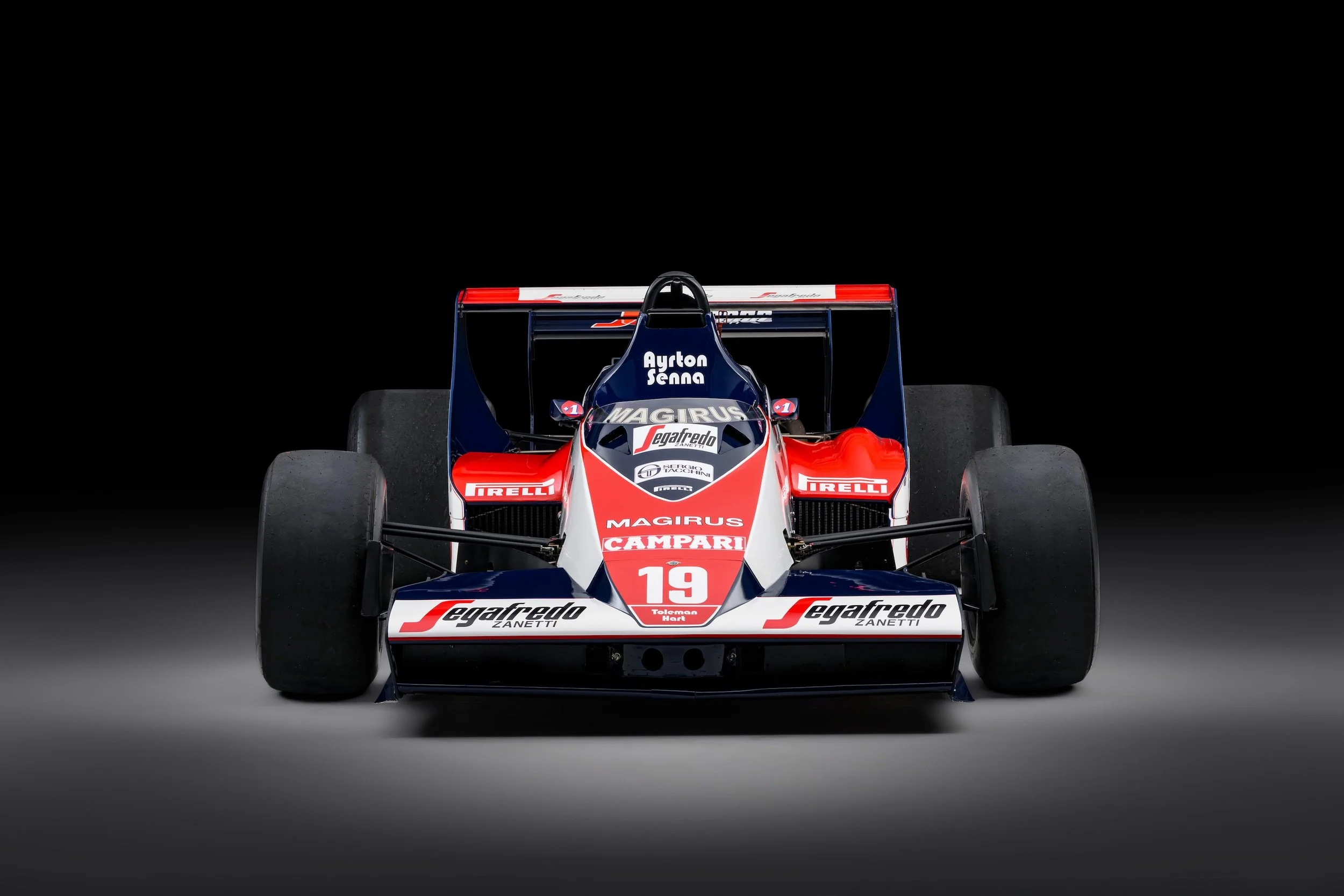
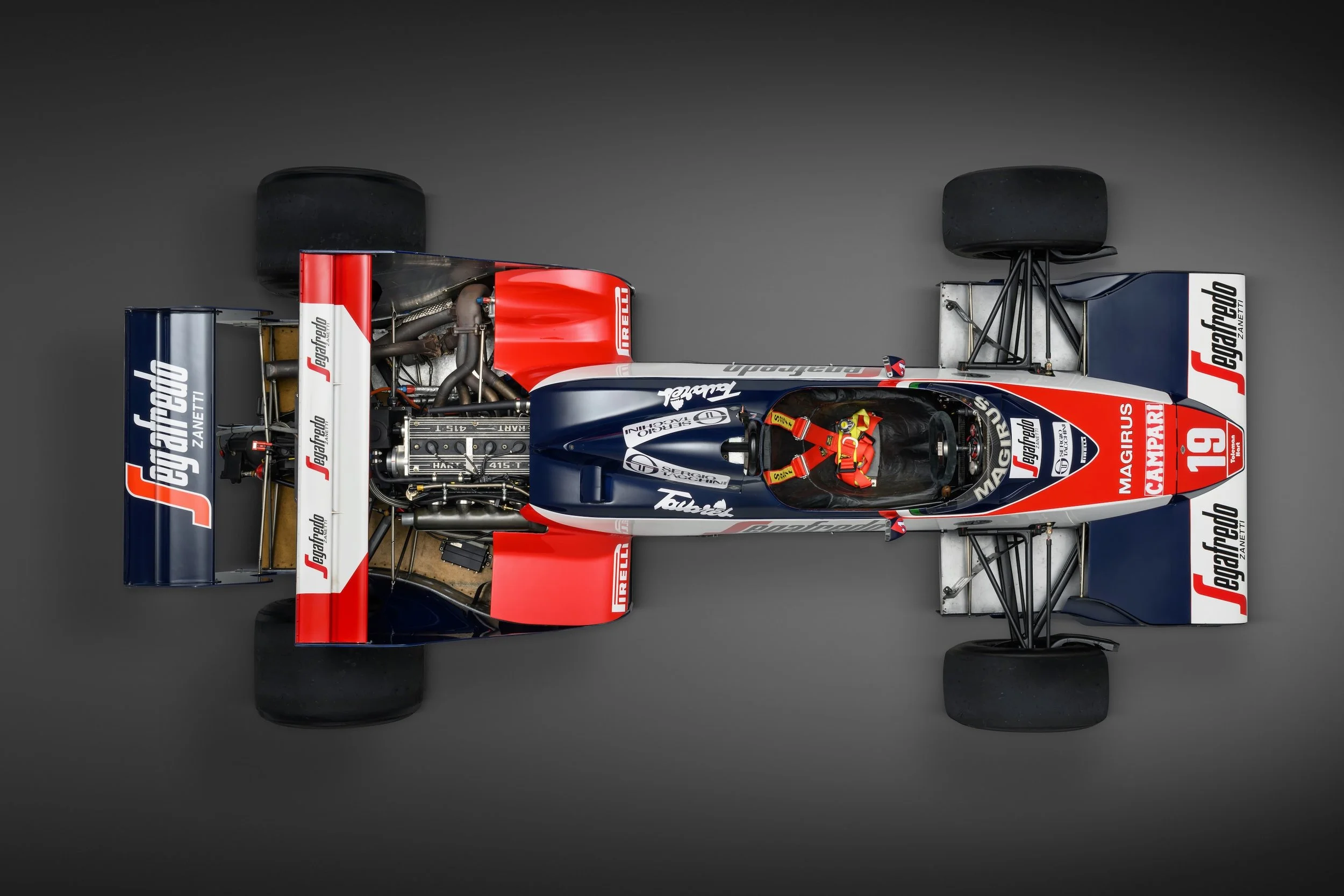
1984 Toleman TG183B - Ex Ayrton Senna
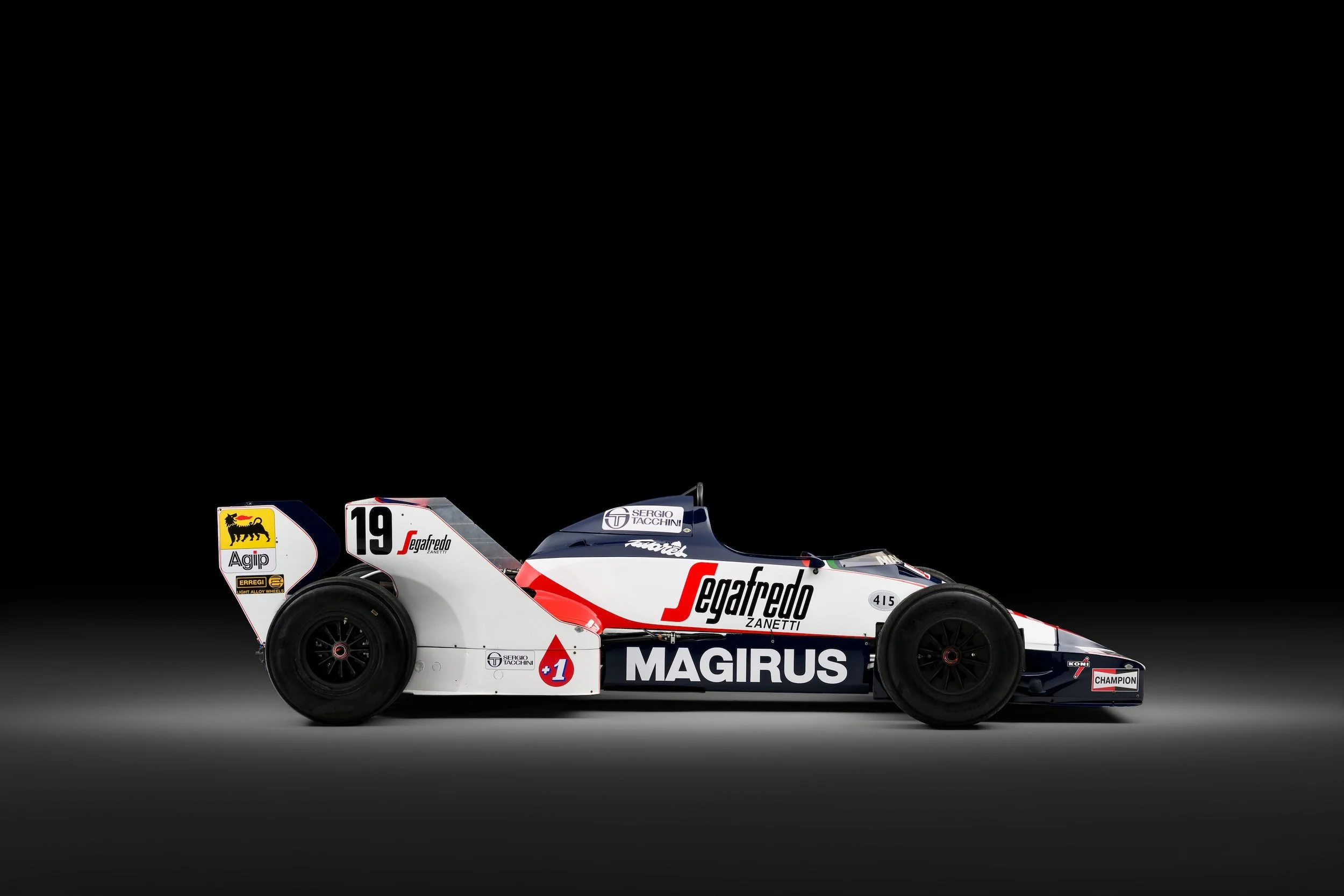
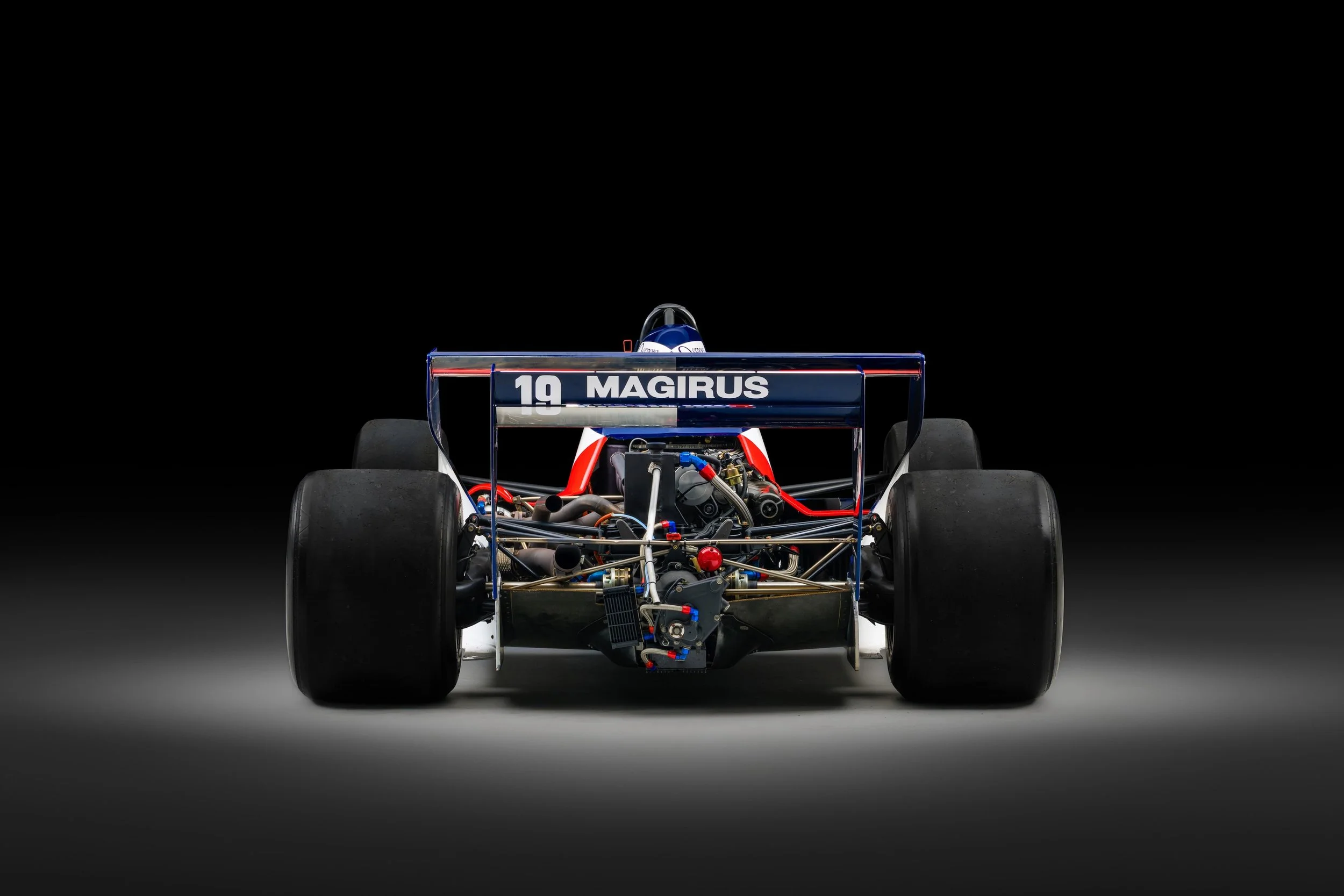
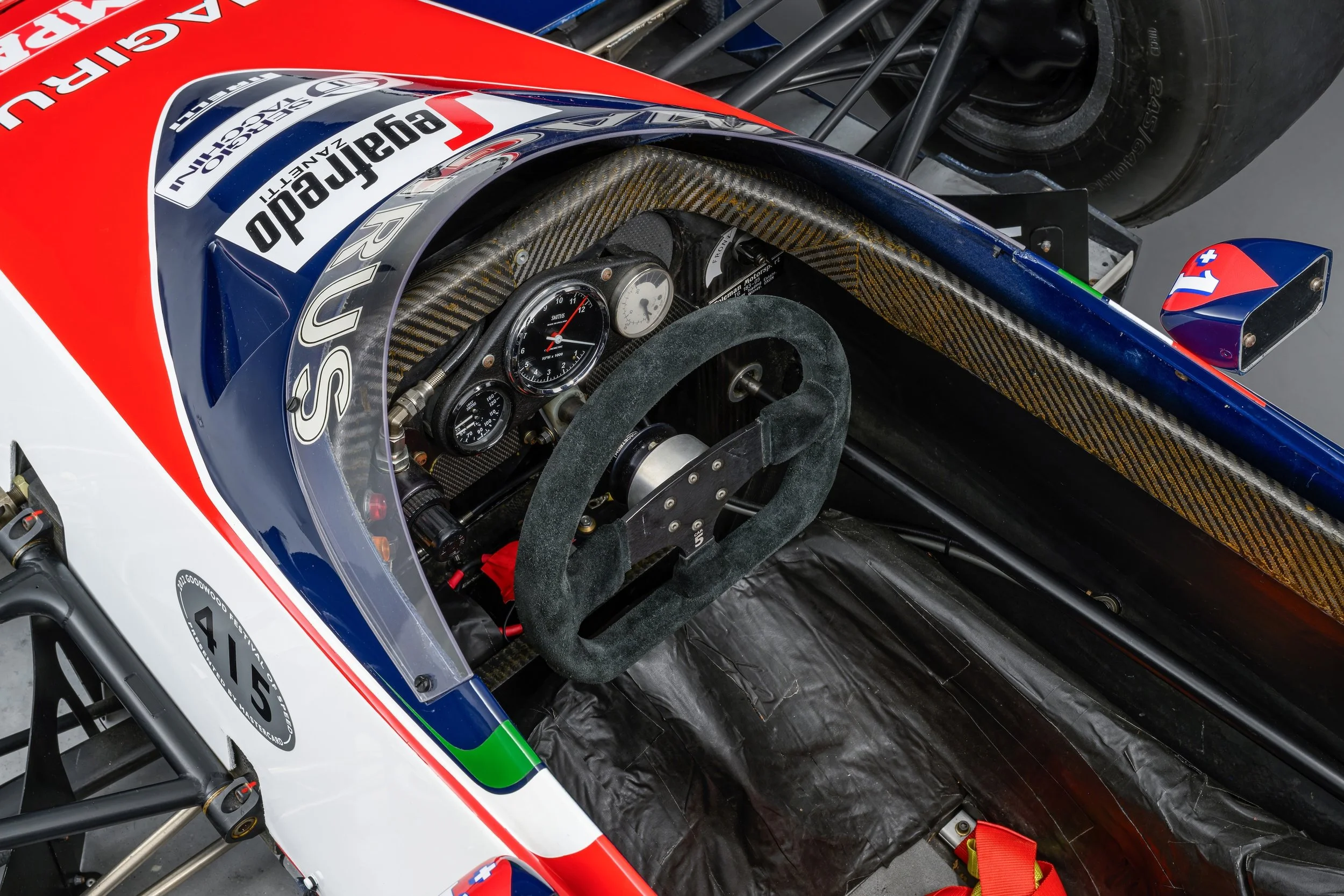
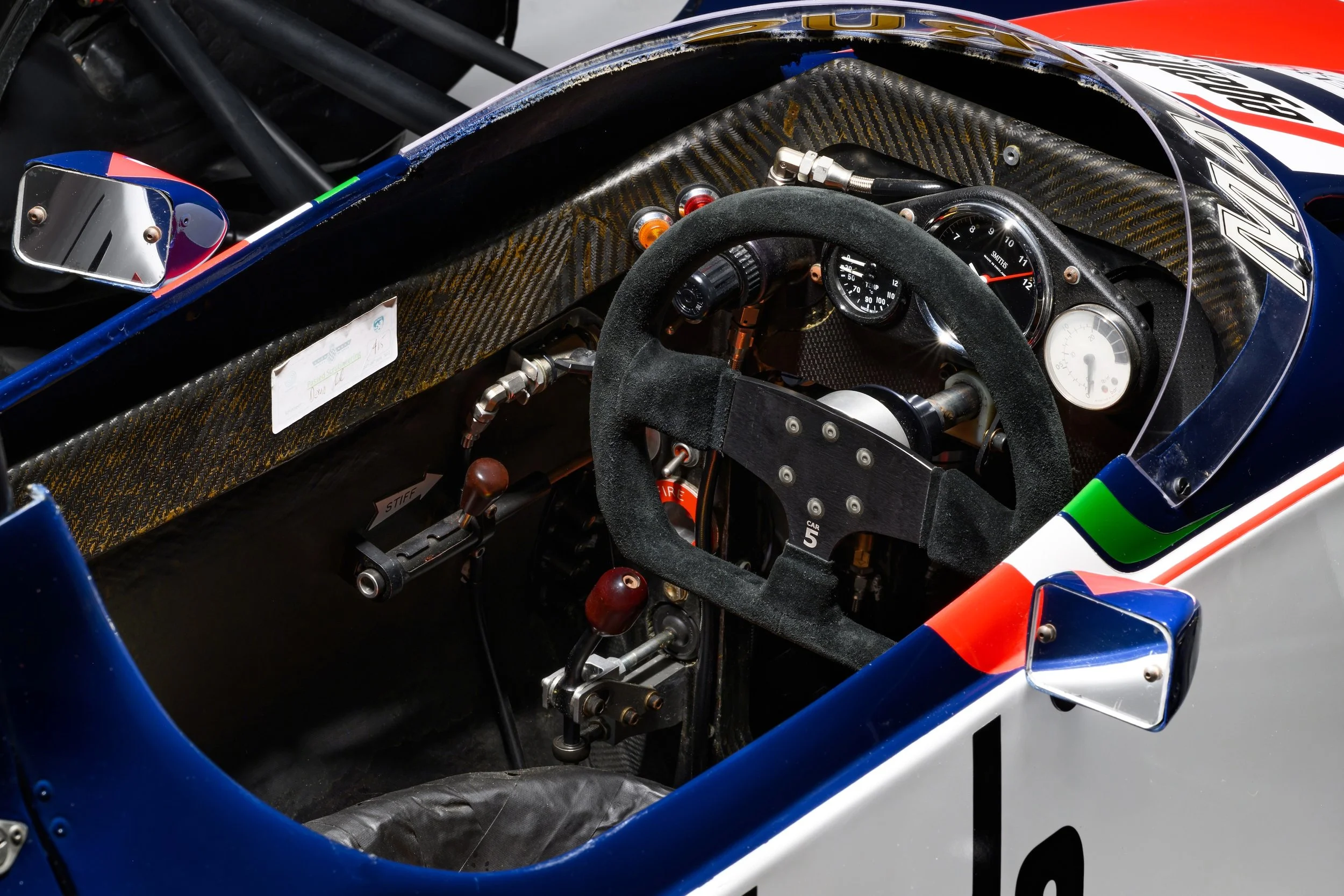
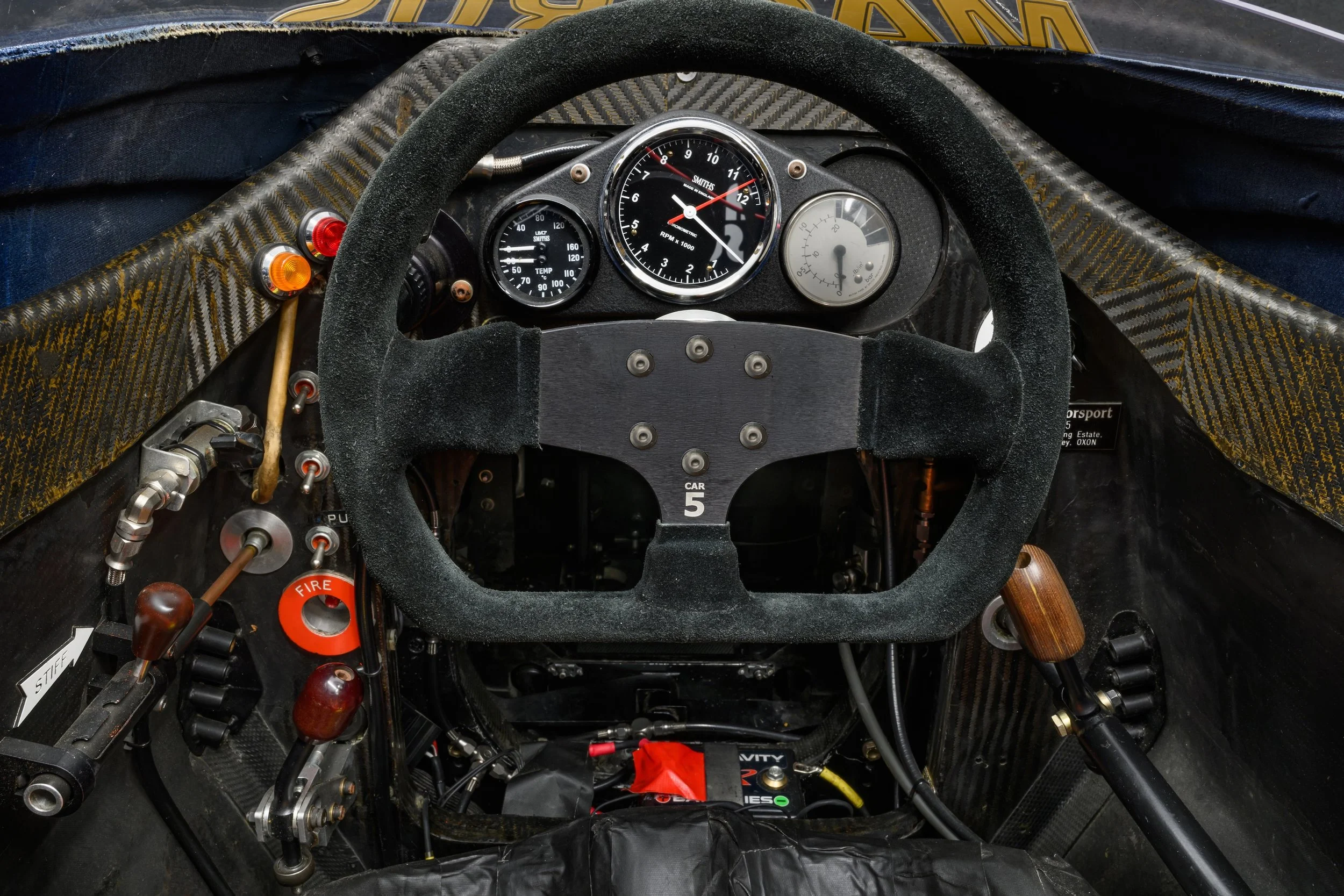
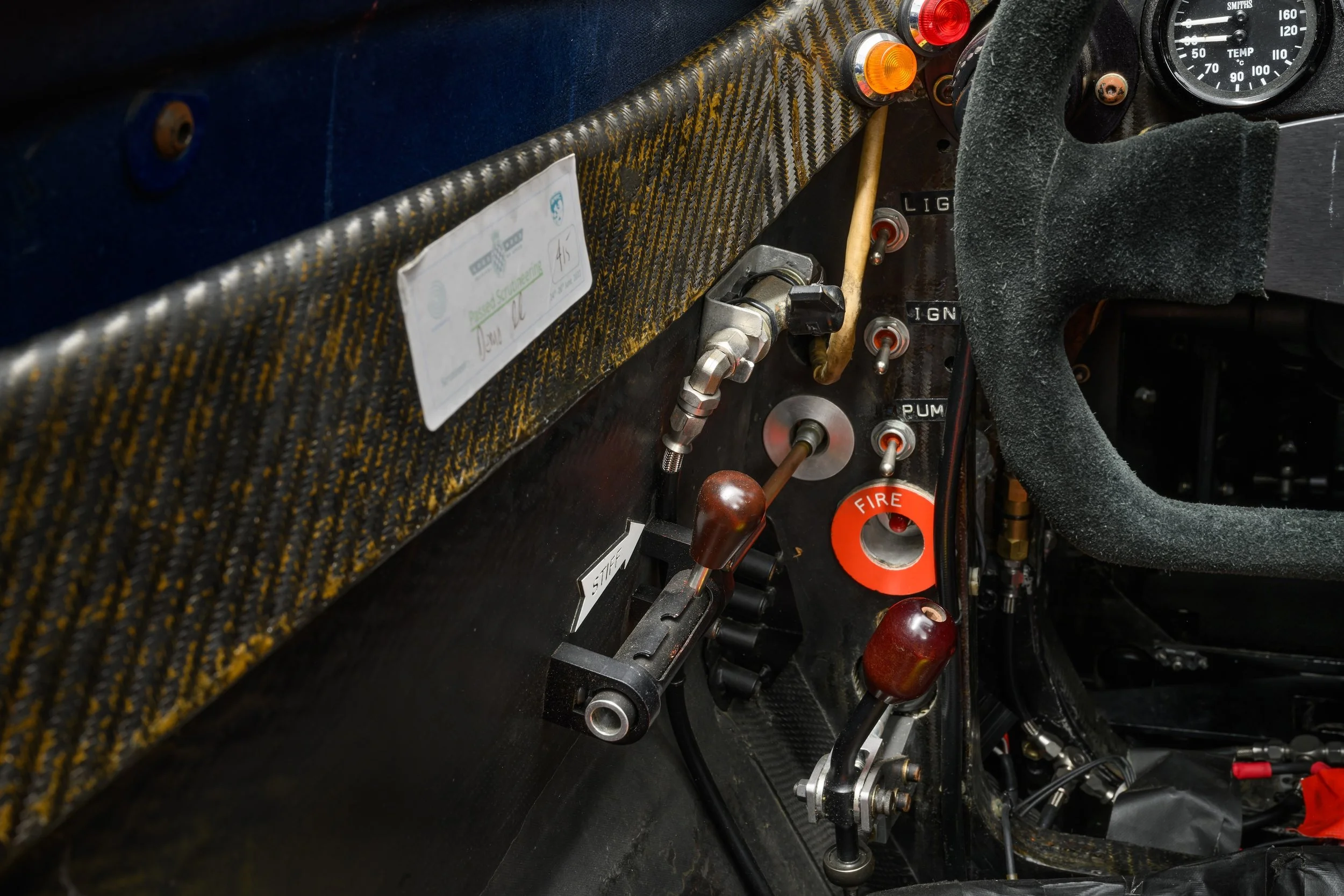
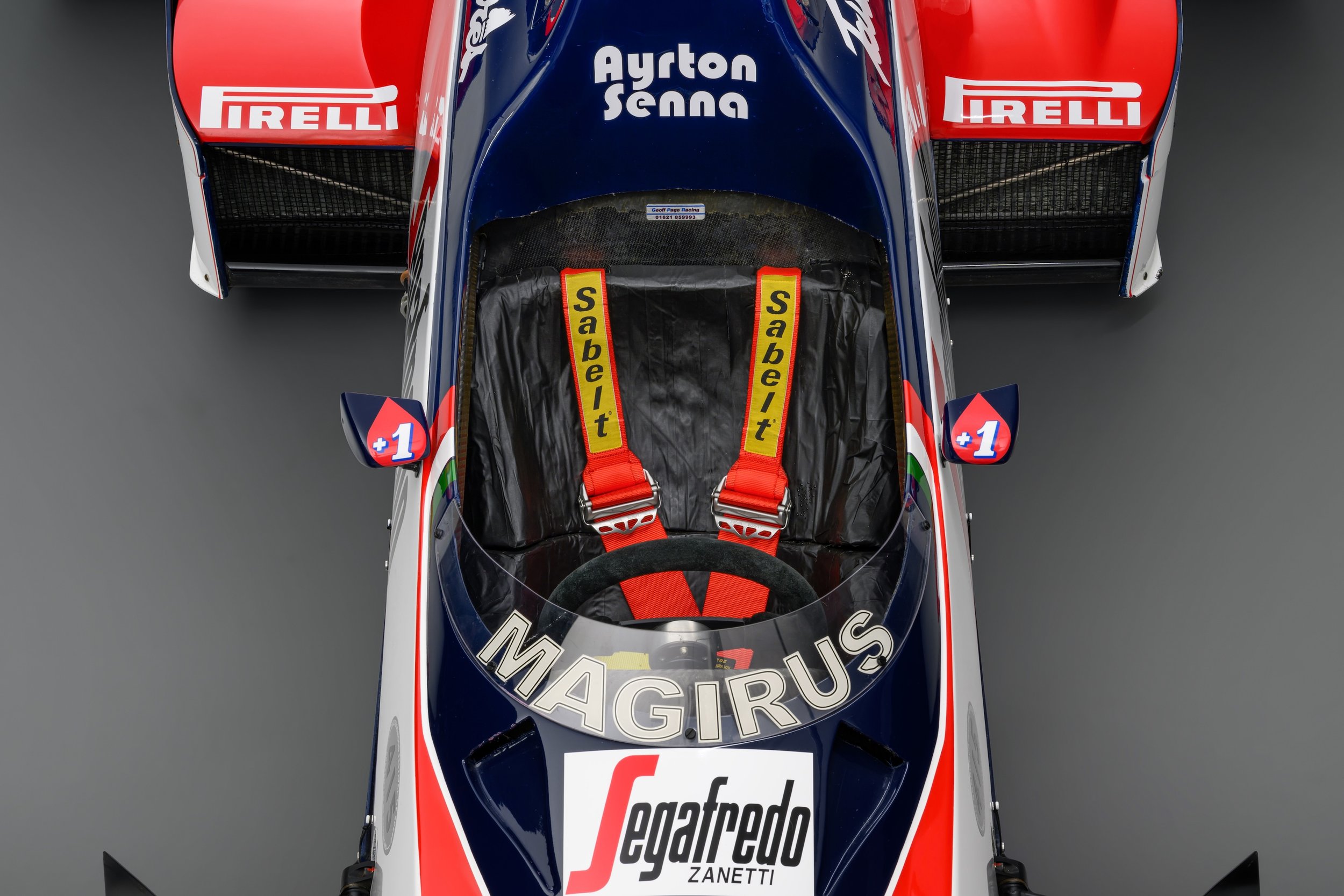
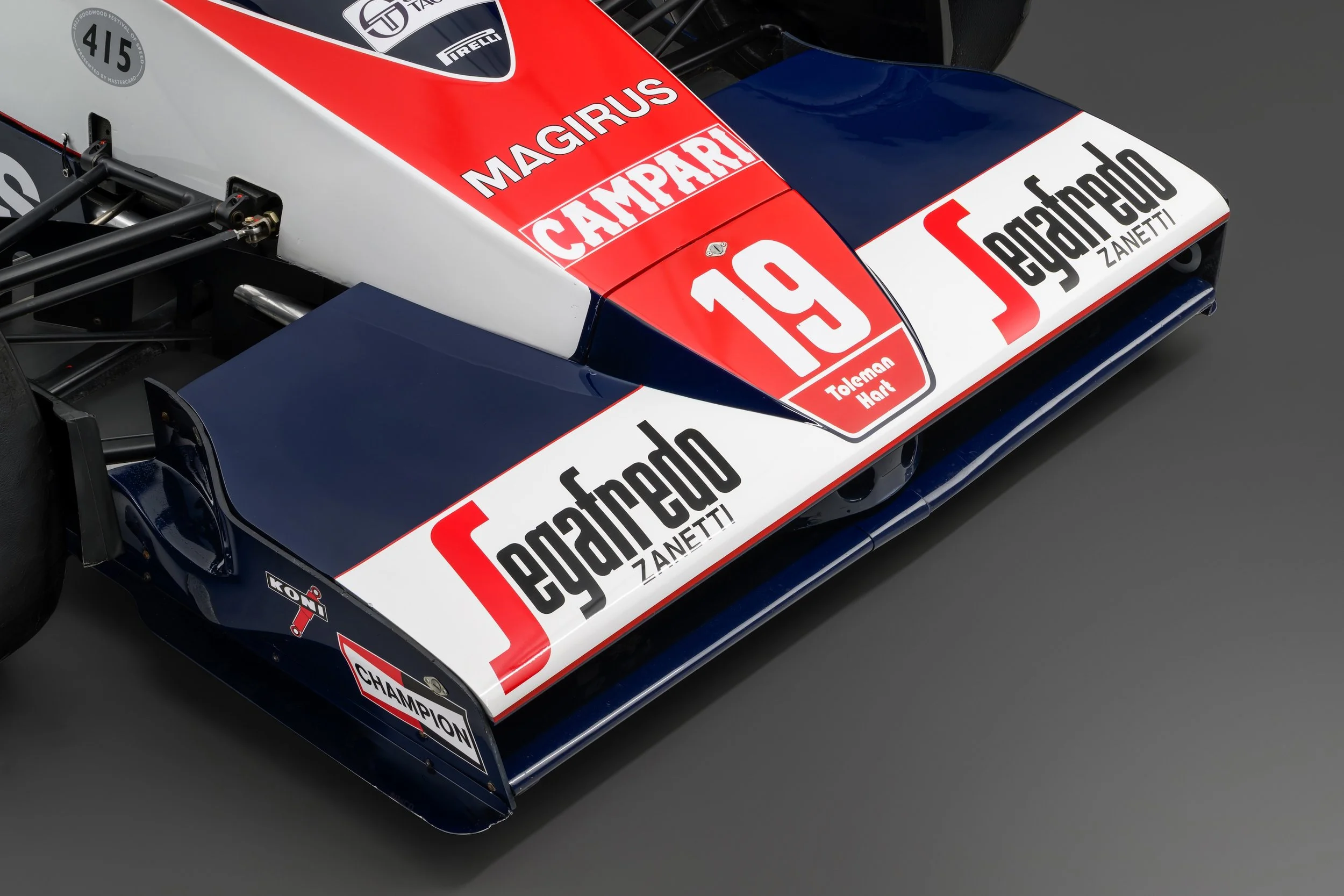
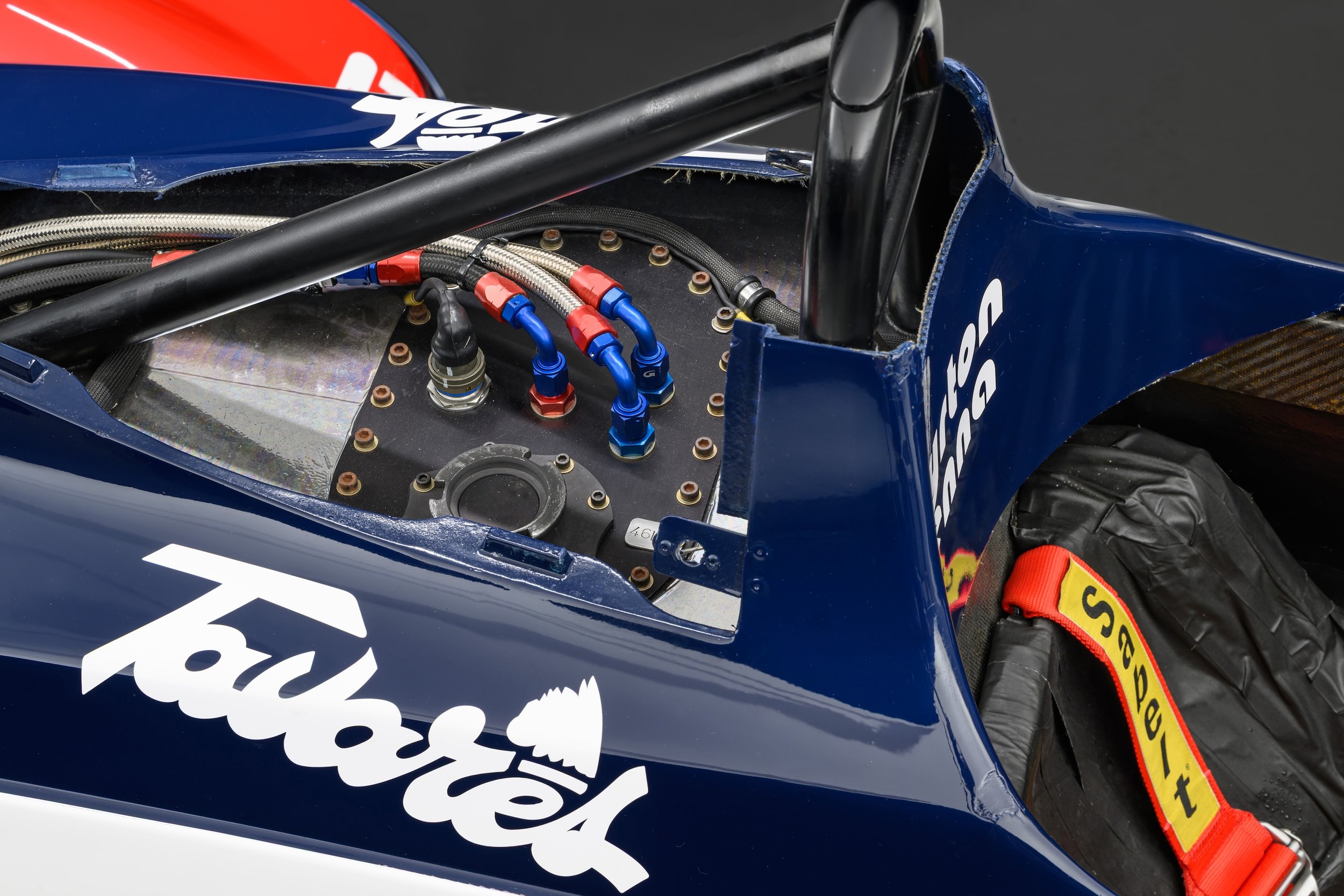
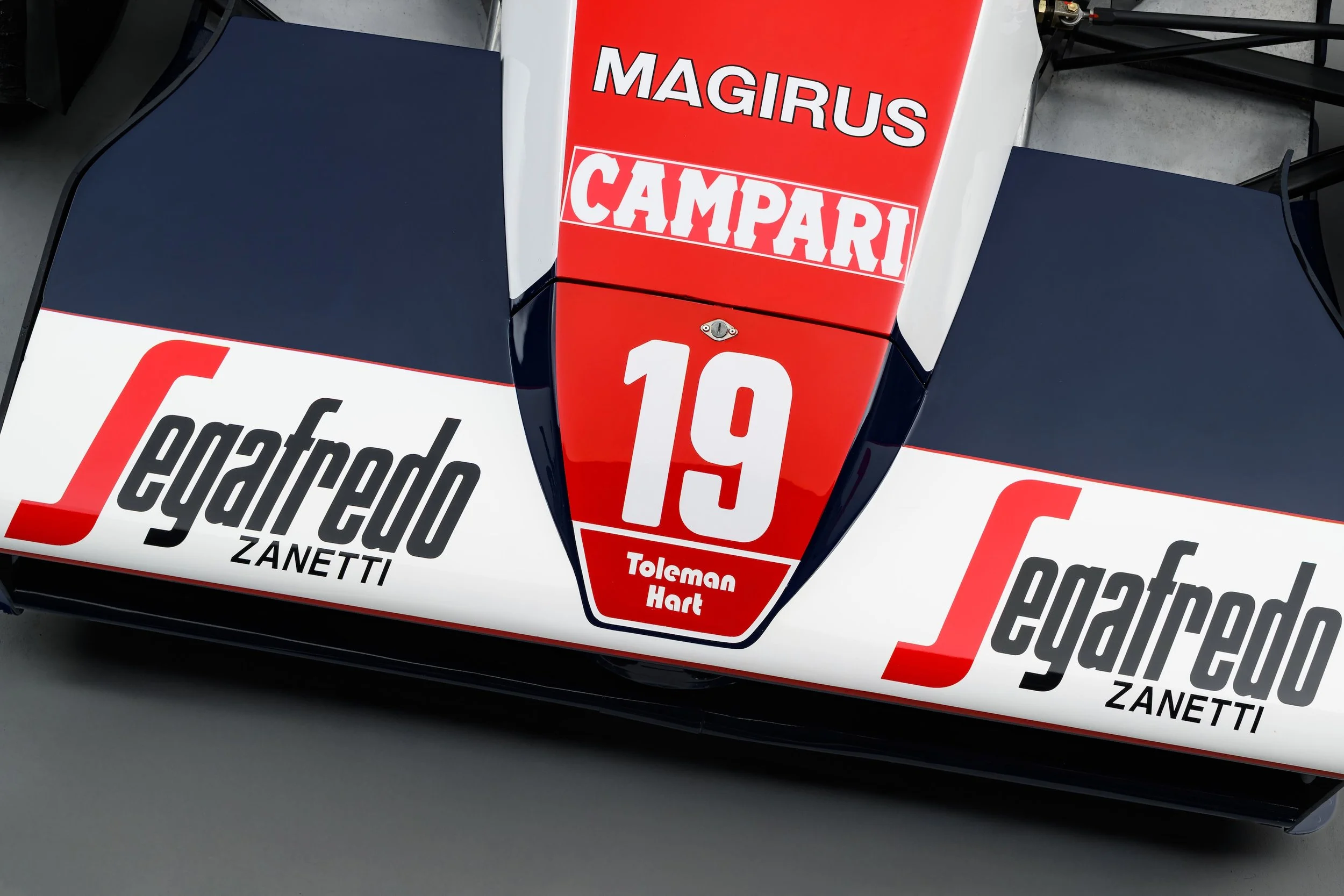
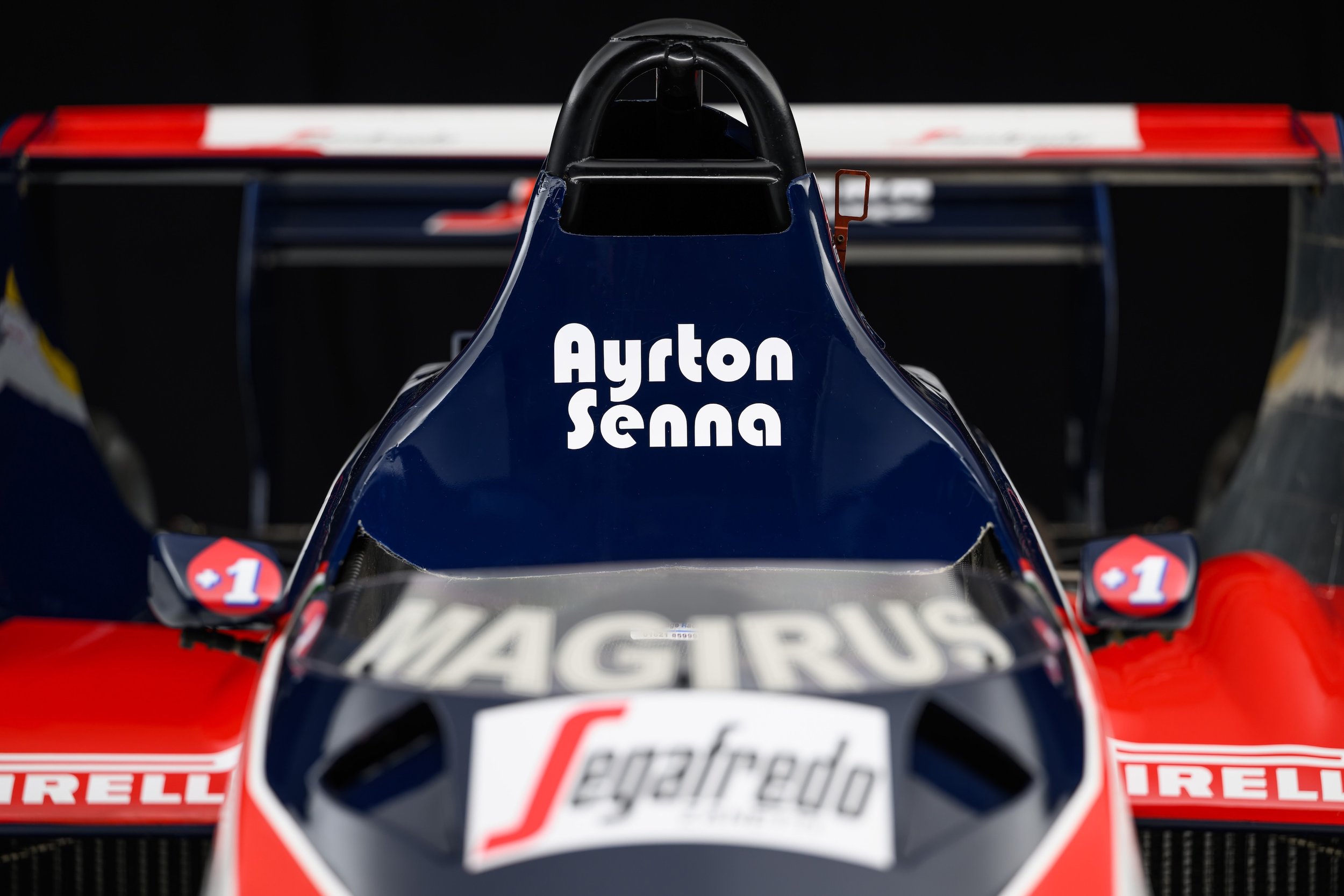
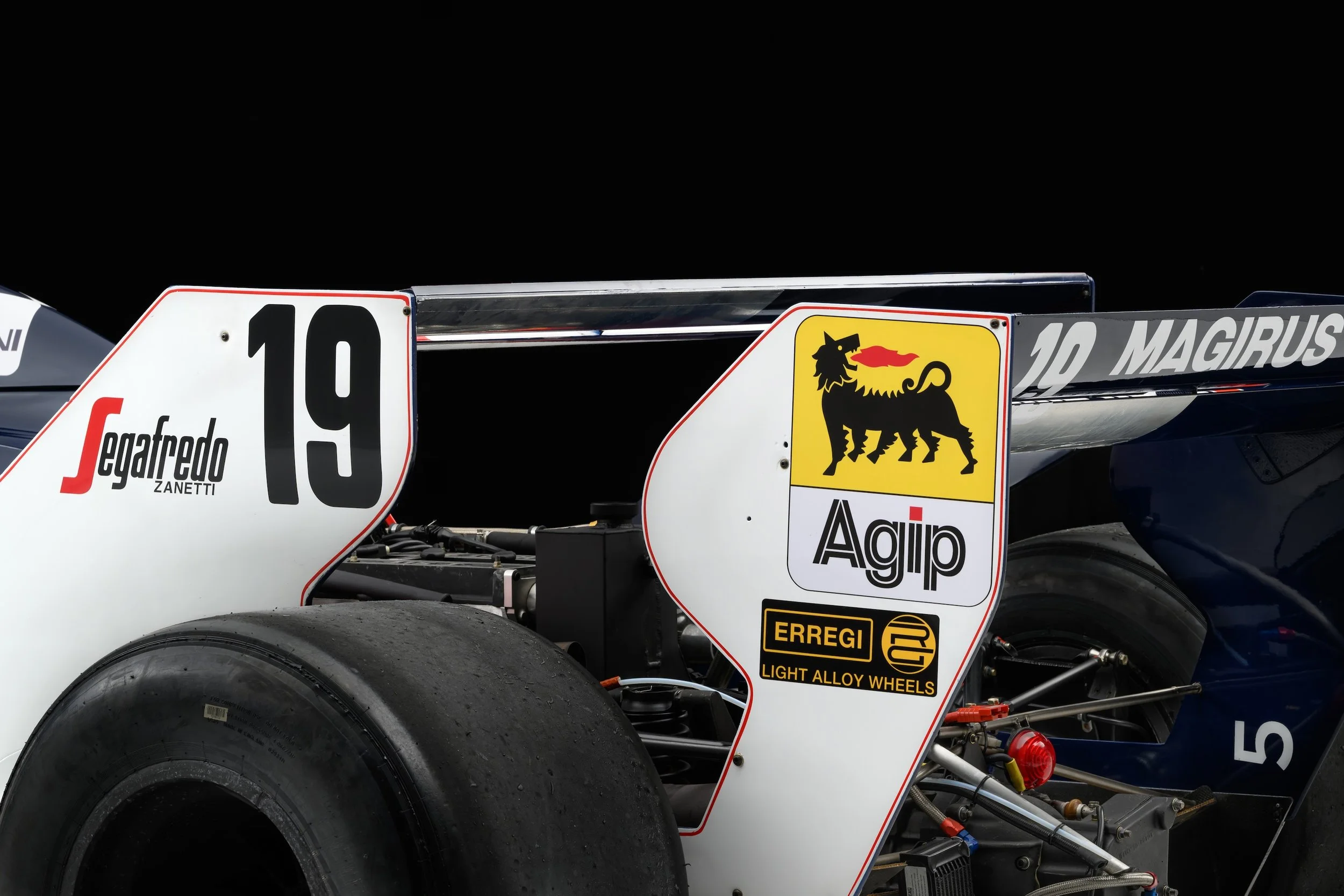
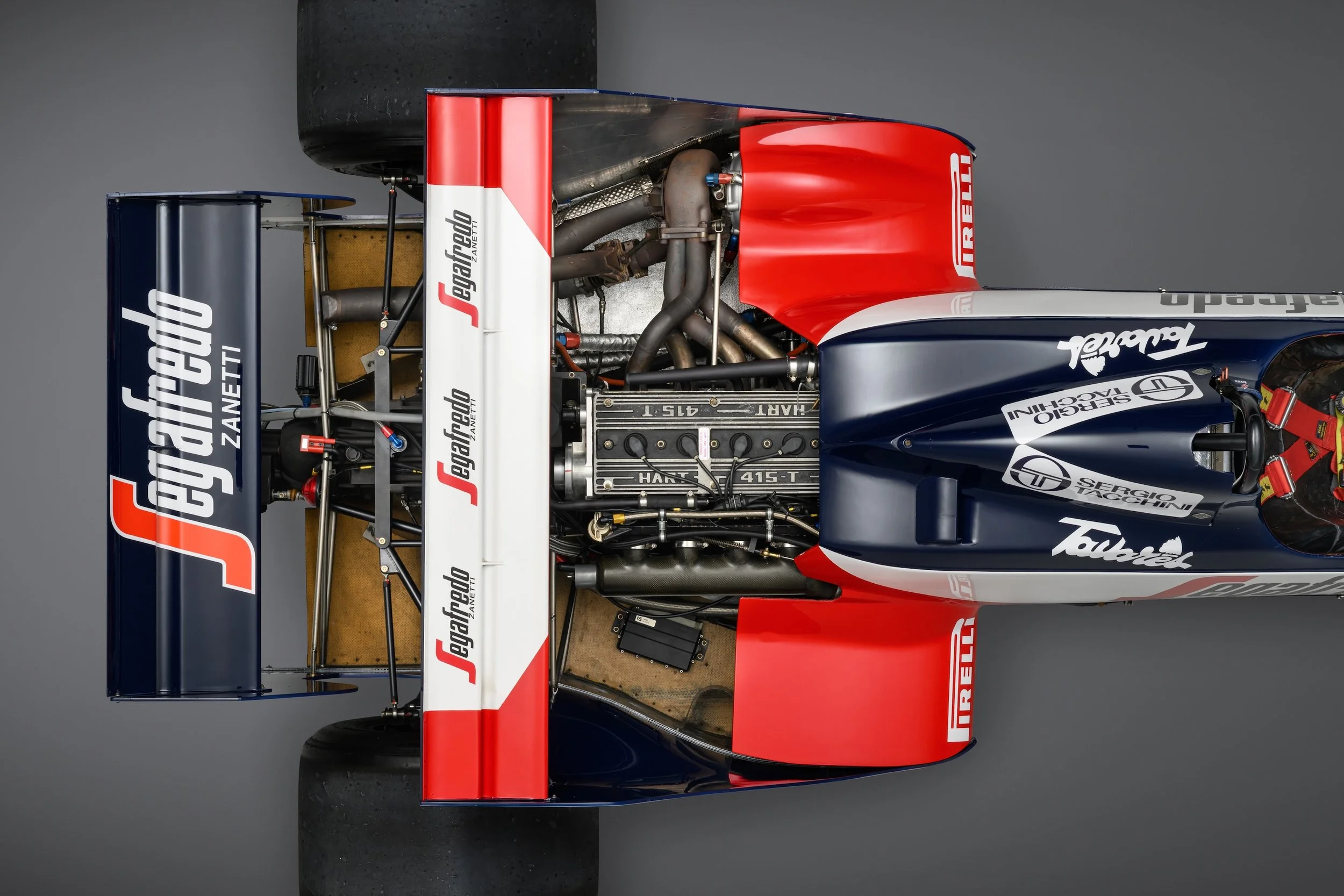
The origin of a legend: the very car driven by Ayrton Senna on his Formula 1 debut at the 1984 Brazilian Grand Prix.
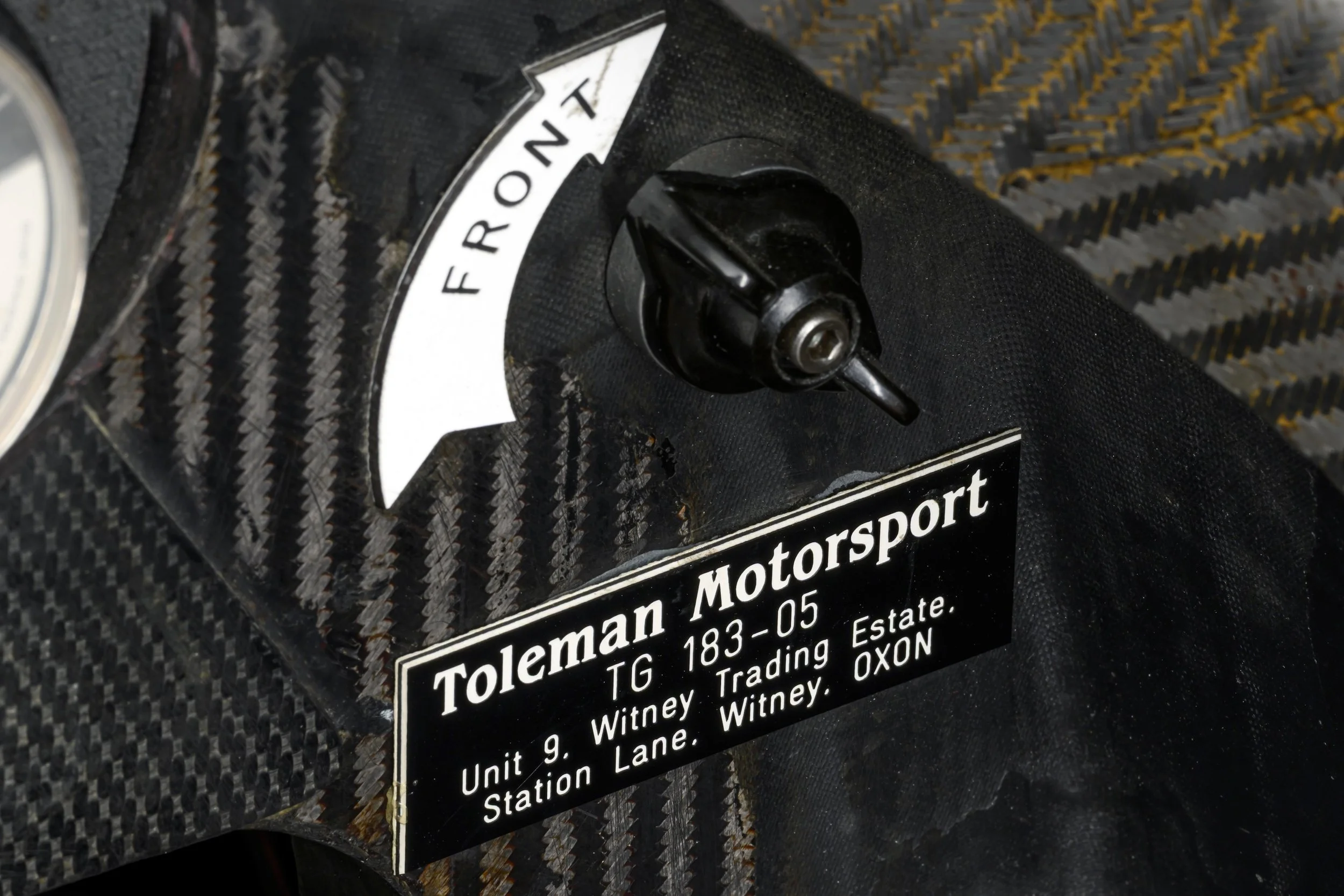
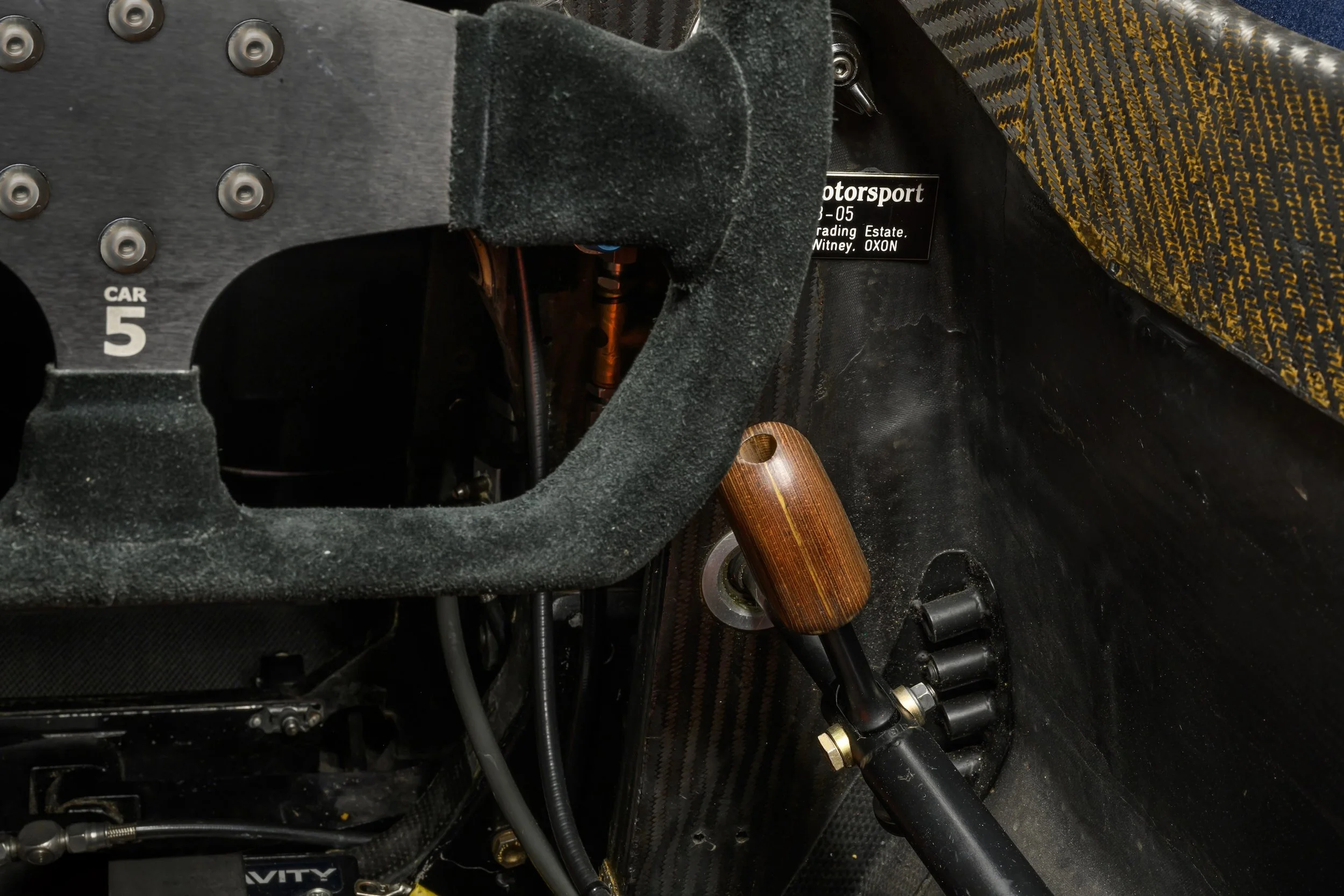
Three Formula 1 World Championships, 41 Grand Prix victories from 161 starts, 39 further podium finishes, and 65 pole positions. Ayrton Senna’s extraordinary top-level record began with this car: the 1984 Toleman TG183B, chassis number 05.
Winning the opening nine rounds of the 1983 British Formula 3 season earned the 23-year-old Brazilian test opportunities with Brabham, McLaren, and Williams. None of those teams, however, could offer him an immediate step up. Senna instead signed with Toleman, initially on a three-year contract. Born out of a family-owned car transport business, the team had progressed from winning the Formula 2 title to entering Formula 1 with its own chassis and turbocharged engine.
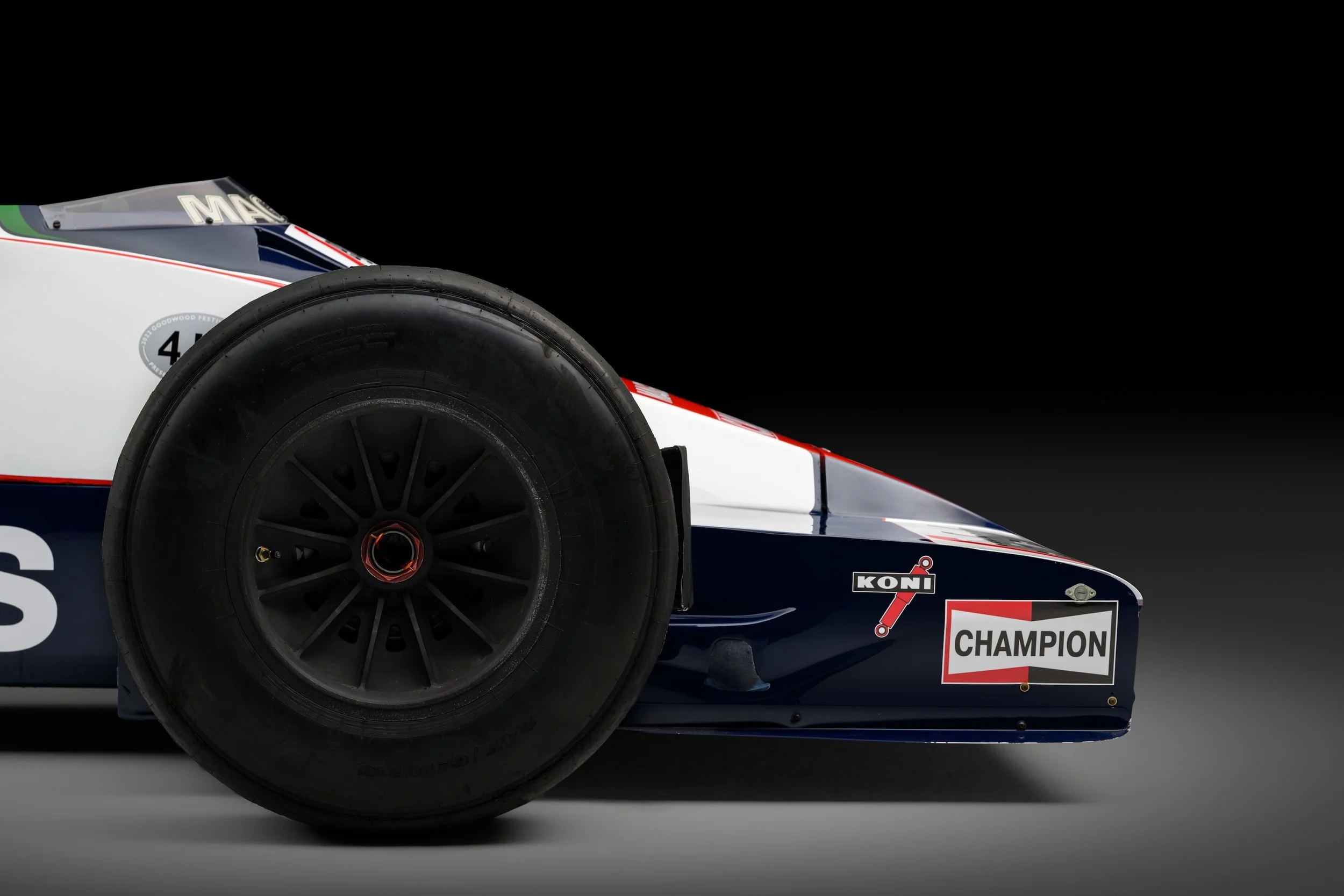
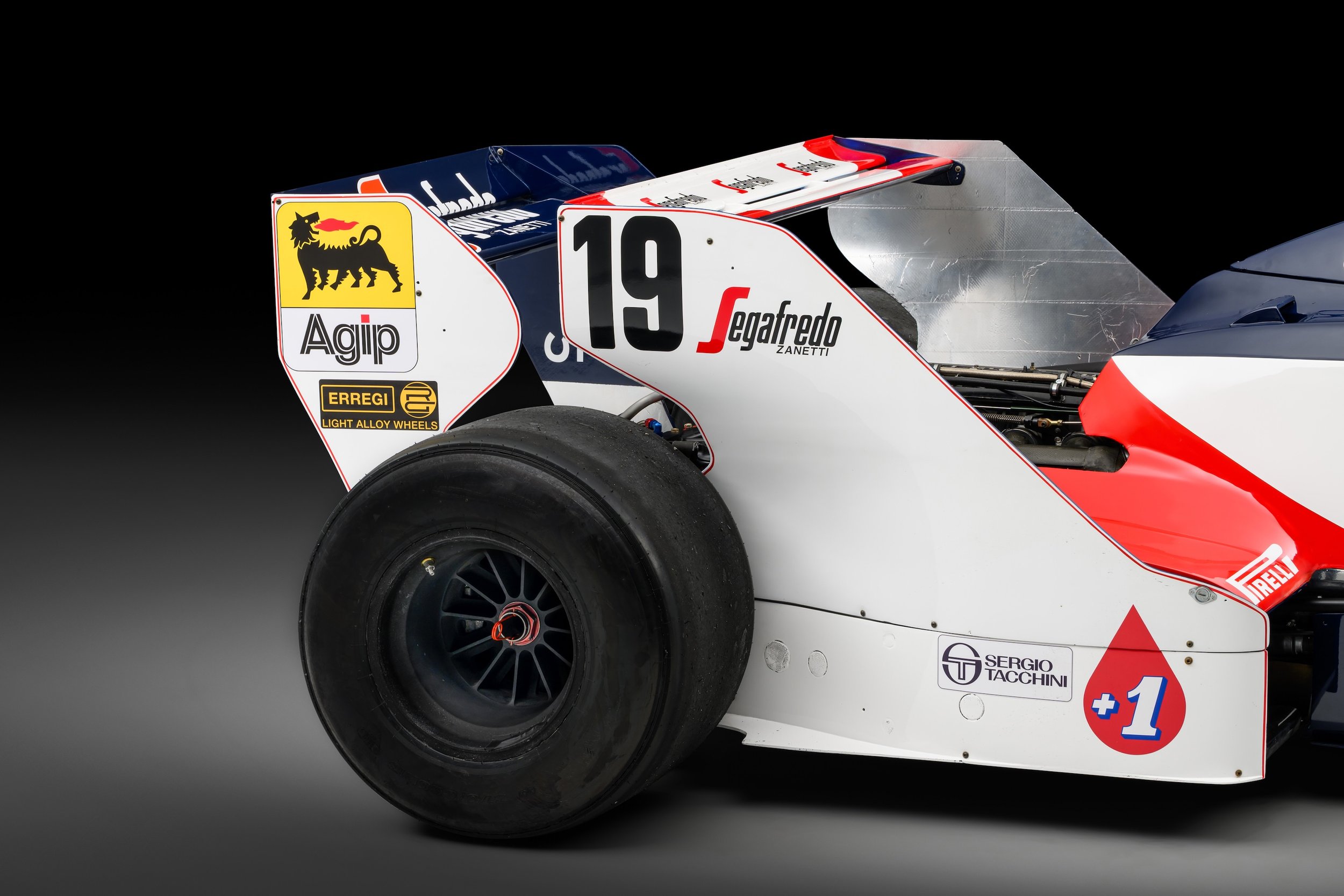
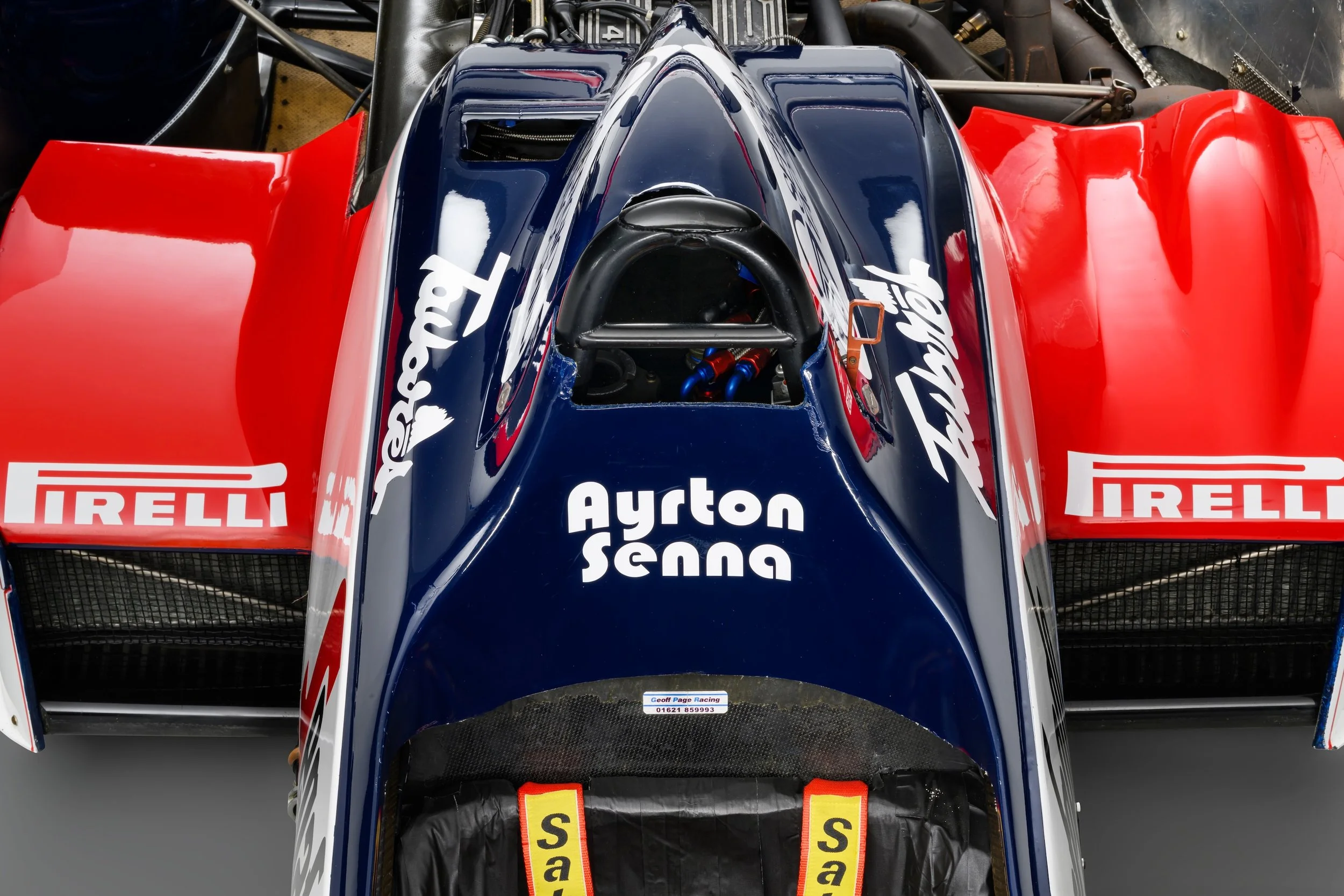
While waiting for the new TG184 to be completed, Senna and team-mate Johnny Cecotto began the 1984 season in the updated TG183B. Senna’s car was a brand-new chassis built over the winter. Penned by Rory Byrne, later the architect of seven Constructors’ Championship-winning cars for Benetton and Ferrari, alongside John Gentry, the design was instantly recognizable for its distinctive front wing-mounted radiator and twin rear wings.
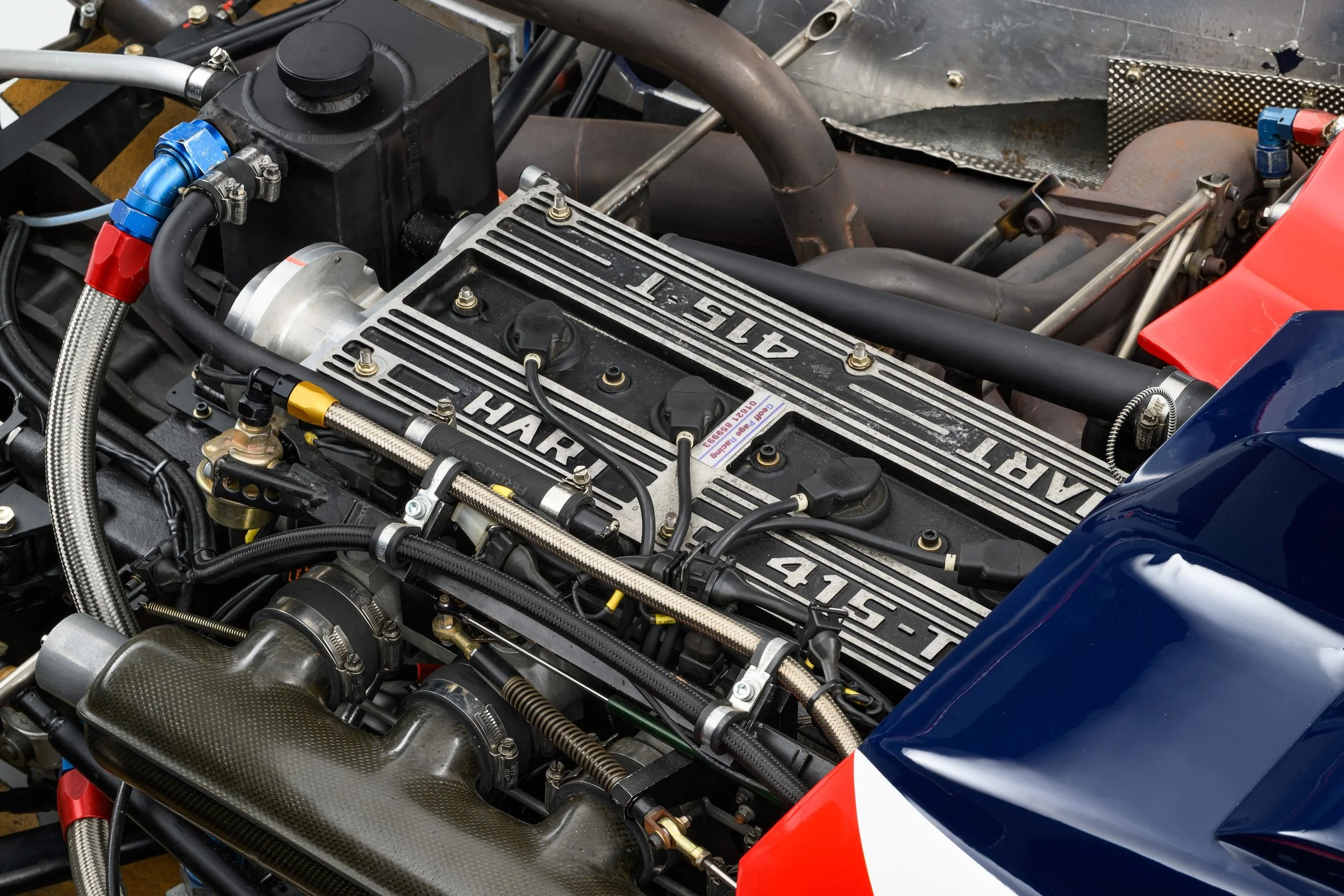
Fittingly, Senna’s Formula 1 debut came on home soil. He qualified TG183B-05 just ahead of Cecotto to secure 16th on the grid for the Brazilian Grand Prix in Rio de Janeiro. His race, however, ended early: the Holset turbocharger feeding the 1.5-litre four-cylinder Hart engine failed on lap eight, making him the first retiree of the 1984 season. After that brief introduction, the rookie made a far stronger impression at the following South African Grand Prix.
Under the guidance of race engineer Pat Symonds, Senna qualified 13th at Kyalami. Despite damaging his front wing on the opening lap, he hauled the Toleman to sixth place, finishing as the leading Pirelli runner behind only cars equipped with the superior Michelin and Goodyear tyres. The result earned Senna the first World Championship point of what would become a career total of 614. Confirming how quickly he was adapting to Formula 1, he then recovered from 19th on the grid at Zolder to finish seventh in the Belgian Grand Prix. He was later promoted to sixth after Tyrrell was disqualified from the entire season for running an underweight car and using an illegal water refilling system.
The final front-line appearance for chassis TG183B-05 came at Imola. One set of tires had already delaminated in Brazil, underlining the wider issue that Pirelli was no match for Goodyear or Michelin in 1984. The relationship between Toleman and its tire supplier reached breaking point during the San Marino Grand Prix weekend. With Senna pressing for a switch to Michelin ahead of the TG184’s arrival, the team announced it would not use Pirelli tires during Friday running. The resulting fallout forced both Senna and Cecotto to sit out practice, and Toleman’s contract with Pirelli was torn up soon afterwards.
With the replacement TG184 finally ready for round five at Dijon, chassis TG183B-05 was retired from active duty. Senna, helped in part by his mesmeric drive to second in the rain-soaked Monaco Grand Prix, went on to finish ninth in the World Championship in his rookie season.
Disclaimer:
Article and photography courtesy of RM Sotheby’s. All rights reserved. Materials are used for editorial purposes only and remain the property of their respective copyright holders.
Photos by Tim Scott ©️2026 Courtesy of RM Sotheby’s